




What is the dust emission of a block stone cutting machine during dry cutting?
As a seasoned supplier of Block Stone Cutting Machines, I've witnessed firsthand the evolution and challenges within the stone processing industry. One question that frequently arises from our clients is about the dust emission during dry cutting operations. In this blog, I'll delve into the details of dust emission from block stone cutting machines during dry cutting, its implications, and how our products address these concerns.
Understanding Dry Cutting and Dust Emission
Dry cutting, as the name suggests, is a cutting process that does not involve the use of water as a coolant or lubricant. This method is often preferred in certain situations due to its simplicity and the absence of water-related issues such as wet waste disposal and the potential for water damage to the stone. However, dry cutting generates a significant amount of dust.
When a block stone cutting machine operates in dry cutting mode, the cutting blade grinds and chips away at the stone, creating fine particles that become airborne. The dust emission primarily consists of stone particles, which can vary in size and composition depending on the type of stone being cut. For instance, cutting marble and granite, two of the most commonly processed stones, produces different types of dust.
Marble is a metamorphic rock composed mainly of calcite or dolomite. When a Marble Block Cutting Machine cuts marble in dry conditions, the dust is typically fine and powdery. The calcite or dolomite particles can be easily inhaled, posing potential health risks to the operators. Prolonged exposure to marble dust can cause respiratory problems such as silicosis, a lung disease caused by the inhalation of crystalline silica dust.
On the other hand, granite is an igneous rock rich in quartz, feldspar, and mica. A Granite Block Cutting Machine cutting granite during dry cutting generates dust that contains high levels of silica. Silica dust is extremely hazardous and can cause serious health issues, including lung cancer, chronic obstructive pulmonary disease (COPD), and silicosis.
Factors Affecting Dust Emission
Several factors influence the amount of dust emitted during dry cutting with a block stone cutting machine.
Stone Type and Hardness: As mentioned earlier, different types of stones produce different amounts and types of dust. Harder stones like granite generally require more force to cut, which can result in greater dust generation compared to softer stones like marble.
Cutting Speed and Feed Rate: Higher cutting speeds and feed rates can increase the amount of dust emitted. When the machine operates at a faster pace, the cutting blade chips away at the stone more aggressively, creating more fine particles.
Blade Condition: A dull or worn-out blade can cause inefficient cutting, leading to increased dust production. A sharp blade cuts through the stone more cleanly, reducing the amount of dust generated.
Machine Design and Enclosure: The design of the block stone cutting machine plays a crucial role in dust emission. Machines with proper enclosures and dust collection systems can significantly reduce the amount of dust released into the environment.
Implications of Dust Emission
The dust emission from dry cutting block stone cutting machines has several implications, both for the environment and the health of the operators.
Health Risks: As discussed earlier, the inhalation of stone dust, especially silica dust, can cause serious health problems. Operators working in environments with high dust levels are at a greater risk of developing respiratory diseases. This not only affects the well - being of the workers but also leads to increased absenteeism and reduced productivity in the workplace.
Environmental Impact: The dust released into the air can contaminate the surrounding environment. It can settle on nearby vegetation, affecting plant growth, and can also contribute to air pollution. In addition, the dust can accumulate on the ground, potentially causing soil contamination.
Machine Performance and Maintenance: Excessive dust can also affect the performance and lifespan of the block stone cutting machine. Dust particles can enter the machine's moving parts, causing wear and tear, and can also clog the ventilation systems, leading to overheating.
Our Solutions to Reduce Dust Emission
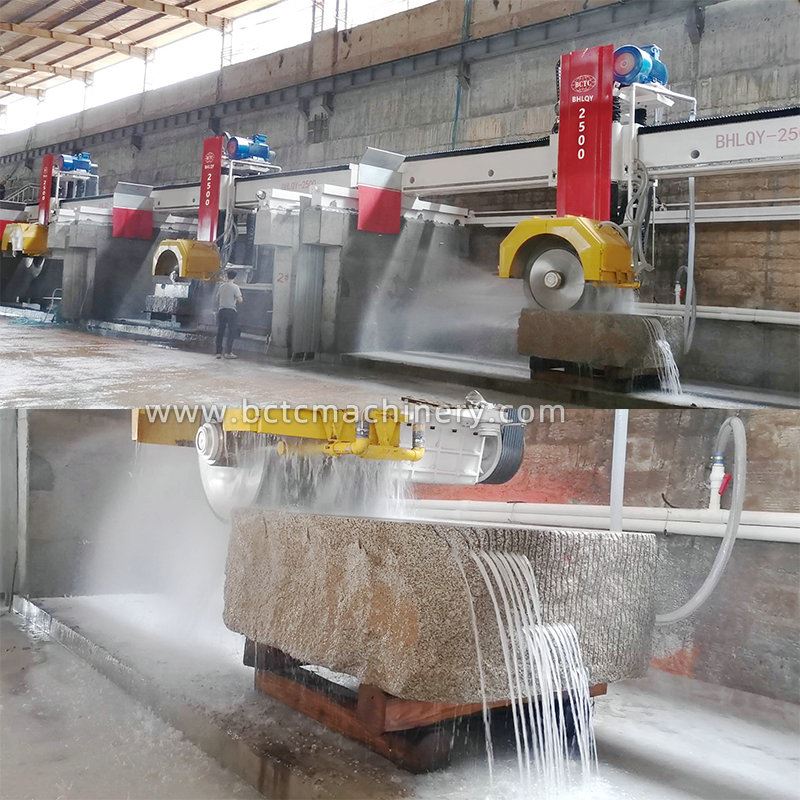
At our company, we understand the importance of addressing the issue of dust emission during dry cutting. That's why we've incorporated several features into our Marble Block Cutter and other block stone cutting machines to minimize dust generation and ensure a safe working environment.
Advanced Dust Collection Systems: Our machines are equipped with state - of - the - art dust collection systems that capture the dust at the source. These systems use powerful suction to draw the dust into a collection chamber, preventing it from being released into the air.
Enclosed Cutting Areas: We design our machines with enclosed cutting areas to contain the dust within the machine. This not only reduces the amount of dust emitted into the environment but also protects the operators from direct exposure to the dust.
Optimized Blade Design: Our cutting blades are designed to cut through the stone efficiently, reducing the amount of dust generated. We use high - quality materials and advanced manufacturing techniques to ensure that the blades remain sharp for longer periods, further minimizing dust production.
Contact Us for More Information
If you're in the market for a block stone cutting machine and are concerned about dust emission during dry cutting, we're here to help. Our team of experts can provide you with detailed information about our products and how they can meet your specific needs. Whether you're cutting marble, granite, or other types of stones, our machines are designed to deliver high - performance cutting with minimal dust emission.

Don't hesitate to reach out to us for a consultation. We look forward to discussing your requirements and helping you find the perfect block stone cutting machine for your business.
References
- "Occupational Exposure to Stone Dust: Health Risks and Prevention Strategies" - National Institute for Occupational Safety and Health (NIOSH)
- "Environmental Impact of Stone Cutting Operations" - Journal of Environmental Science and Technology
- "Advances in Dust Collection Technology for Industrial Cutting Machines" - International Journal of Manufacturing Technology