


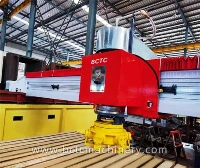
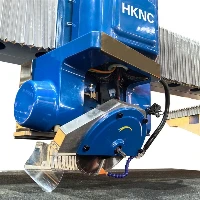
Stone polishing machines are professional equipment used to polish and optimize the surface texture of various natural stones such as marble, granite, and limestone. After polishing, the stone surface can achieve a delicate, smooth, and glossy finish. Polishing not only significantly enhances the visual texture and decorative style of the stone, but also densifies the surface structure and strengthens its physical properties such as wear resistance and corrosion resistance. The following are key operating precautions for stone polishing machines:
1. Polishing wheels are the core consumable parts in stone polishing operations, determining the final quality of the polishing process. All fine surface processing steps for various stones rely on the use of polishing wheels. Rough planing, deburring, and high-gloss mirror polishing are all completed using polishing wheels. Furthermore, polishing wheel selection must be highly adaptable; different textures and types of stone must be matched with polishing wheels of corresponding specifications and materials. Universal accessories should not be used interchangeably.
2. Dry grinding is strictly prohibited. Dry grinding alone will severely scratch the stone surface, causing irreversible damage. During formal polishing, polishing compound must be evenly applied to the polishing wheel. The lubrication, grinding, and brightening effects of the polishing wax will optimize the polishing effect. The core basis for adjusting the working conditions of the stone polishing machine is the hardness of the workpiece material and the preset polishing standard. Equipment parameters and consumables must be flexibly adjusted based on these two factors.
3. Unstable workpiece clamping is a frequent safety and quality hazard on-site. Polishing workpieces come in a variety of shapes, including pipes, square steel, plates, and various non-standard irregular shapes. Small, irregularly shaped workpieces must be securely fixed with fixtures before polishing. Worktable fixtures are mainly divided into three categories: ordinary mechanical fixtures, vacuum chuck fixtures, and electromagnetic vacuum chuck fixtures. If fixing fixtures are omitted during the polishing of irregularly shaped workpieces, the workpiece is prone to slippage, scattering, and collisions. This not only damages the finished product but also easily leads to safety accidents, making it a primary taboo in stone polishing operations.


Specification of Stone Polishing Machine
|
Stone polishing machine |
||
|
Gyro radius |
Mm |
2500 |
|
Max. spindle lifting srtroke |
Mm |
80 |
|
Max. lifting stroke |
Mm |
470 |
|
Water consumption |
M³/h |
1 |
|
Power of main motor |
Kw |
5.5/7.5 |
|
Total power |
Kw |
6/8 |
|
Dimension |
Mm |
3200×1650×1800 |
|
Weight |
Kg |
750 |