

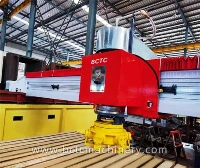
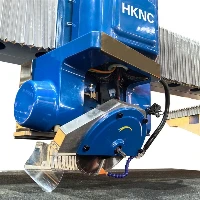


I. Core Operational Requirements for Factory Stone Polishing
Factory stone polishing involves a series of interconnected, standardized processes that directly determine the visual quality of the slabs and the pass rate of the finished product. The complete workflow encompasses slab loading and positioning, surface pre-treatment, primary polishing, quality inspection, cleaning and drying, and finished product stacking and packaging; high-precision products may also require secondary finishing steps such as edge grinding and localized touch-ups.
The standardized workflow can be summarized as follows: slab loading and positioning, equipment and surface pre-treatment, primary polishing, gloss consistency verification, cleaning and drying, stacking and packaging, and-where necessary-secondary finishing.
Selecting a stone polishing machine requires a comprehensive assessment of the entire production process rather than focusing on a single parameter. Even if a machine offers excellent polishing speed and results, issues such as loading/unloading bottlenecks, complex maintenance, or high failure rates can severely constrain overall production capacity and increase hidden costs associated with repairs and downtime. Buyers should systematically select suitable equipment by considering the factory's production pace, the efficiency of process integration, and equipment maintenance costs.
II. Key Selection Criteria Based on Stone Material
Different stone materials vary significantly in hardness, heat resistance, and wear resistance. Consequently, the polishing pressure, abrasives, and cooling methods required for processing differ, necessitating equipment that is precisely matched to the specific material's characteristics.
(i) Selection for Granite Polishing
Granite is hard, wear-resistant, and abrasive. Processing requires equipment with stable pressure, a robust structure, durable abrasives, and an efficient water-cooling system.
Insufficient equipment stability can lead to uneven polishing and frequent rework; therefore, selection should prioritize the wear resistance of the polishing heads, the ability to precisely control pressure, and the long-term durability of the machine.
(ii) Selection for Marble Polishing
Marble has a relatively soft texture and is highly sensitive to pressure, temperature, and scratching. Equipment must be capable of gentle, smooth polishing to prevent surface wear or damage. Clean water sources and compatible abrasives are crucial for ensuring polishing quality; marble processing must prioritize a flat, flawless surface finish over mere processing speed.
(III) Equipment Selection for Artificial and Engineered Stone Polishing
Artificial stone contains composite materials such as resin and has relatively low heat and pressure resistance; processing under high-pressure or high-temperature conditions can easily lead to deformation or inconsistent gloss.
Equipment with adjustable speeds, stable operation, and broad abrasive compatibility is required, with a focus on ensuring highly consistent color and reflectivity across the entire batch of slabs.
(IV) Equipment Selection for Mixed-Material Production
Factories processing multiple material types require highly adjustable equipment capable of flexibly switching between different pressures, abrasives, water flow rates, and processing workflows.
Prioritize versatile, compatible equipment rather than purchasing machines dedicated to a single material type; this balances processing precision with production flexibility while reducing procurement costs.
III. Key Technical Points for Equipment Selection
Selecting a stone polishing machine should not be based on simply stacking hardware specifications; the core approach is precise matching with the factory's actual production conditions. Key selection criteria include:
1. Specification Matching: The equipment's processing width and slab thickness range must align with the dimensions of the slabs primarily produced at the facility, allowing for reasonable processing margins to meet mass production needs.
2. Capacity Matching: Select the number of polishing heads and the conveyor speed based on stable daily output requirements, balancing processing efficiency with polishing quality while avoiding the blind pursuit of extreme maximum capacities.
3. Controllable Precision: The equipment must support stable, adjustable polishing pressure to meet the processing needs of various stone types, ensuring uniform gloss and a defect-free finish on the final product.
4. Cost Control: The equipment should be compatible with mainstream abrasives and align with the facility's water supply and drainage infrastructure, effectively minimizing consumable waste and maintenance costs.
5. Operational Suitability: The level of automation and equipment dimensions should match the workshop layout, production scale, and operator skill levels; ease of maintenance and comprehensive after-sales support are essential to minimize losses caused by downtime.
The core of equipment evaluation lies in its actual production value rather than the superiority of individual specifications. Procurement decisions should prioritize how the equipment enhances finished product quality, production stability, and operational efficiency; the comprehensive processing cost per slab must be calculated to maximize the equipment's cost-performance ratio.
IV. Common Pitfalls and Avoidance Strategies in Equipment Procurement
Misconceptions regarding stone polishing machine procurement often stem from an overemphasis on price and technical specifications while neglecting the equipment's compatibility with the factory's production system-a factor that directly impacts long-term capacity and costs. Key pitfalls to avoid include: prioritizing low purchase prices above all else; blindly selecting high-capacity, multi-head machines for low-capacity operational needs; overlooking compatibility with slab dimensions, abrasives, water supply/drainage, and workshop spatial constraints; ignoring personnel training, maintenance access, and after-sales support; and focusing solely on the unit purchase price without calculating the comprehensive processing cost per slab. Equipment stability, ease of maintenance, and the cost-efficiency of consumables are central to stable production; any short-term price advantage can easily be negated by long-term costs associated with maintenance, high consumable usage, and downtime, ultimately hindering sustainable factory operations.
V. Core Value of High-Quality Polishing Production Lines
High-quality, well-matched polishing equipment comprehensively boosts factory productivity and market competitiveness by optimizing finished product quality, efficiency, and costs through stable polishing processes.
Key advantages include: uniform and flat slab surfaces with superior texture; high automation efficiency that shortens order delivery times; significant reductions in manual touch-ups and rework, saving on consumables and labor; standardized production that lowers defect rates and increases product value-add; and stable, controllable production workflows that allow for precise capacity planning. Consistent slab appearance is crucial for market competitiveness; reliable polishing equipment ensures stable quality across batches, helping the enterprise build a strong reputation.
VI. Key Preparatory Work Before Procurement Inquiries
Before initiating procurement inquiries, enterprises must clearly define their production conditions and requirements to ensure an accurate match with suitable polishing equipment. Key factors to confirm include: stone types to be processed, slab specifications, finish quality standards, production capacity targets, production models, staffing, facility infrastructure, abrasive types, workshop installation space, after-sales requirements, and long-term capacity expansion plans.