


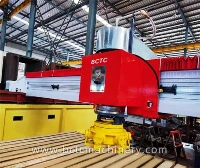
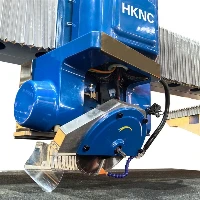
Stone cutting machines are core professional equipment in the stone processing industry, primarily targeting hard building materials such as granite, marble, ceramic tiles, and concrete, completing core processing steps such as cutting, shaping, and finishing. They are widely used in various stone processing scenarios, including construction projects, kitchen and bathroom countertops, and decorative stone tablets.
Choosing an ideal stone cutting machine is not simply a matter of purchasing equipment, but a strategic investment tailored to the company's production scale and long-term development. Before making a final decision, the following factors deserve in-depth consideration:

Production Capacity
Capacity limits directly determine the volume of orders a company can handle and deliver efficiently. If existing equipment has become a bottleneck, leading to order backlogs and longer delivery cycles, then introducing faster, more automated equipment will be a crucial step in breaking through capacity ceilings and achieving large-scale expansion.
Precision Requirements
Cutting precision not only affects the quality of the finished product but also directly impacts the utilization rate of raw materials. Insufficient precision often means that countertop panels will chip, break, or even be scrapped during processing, resulting in unnecessary material waste. High-precision and highly stable cutting performance ensures consistency across batches, significantly reducing rework rates and hidden costs.
Labor Costs
Labor expenses remain a core component of operating costs for stone processing companies. Traditional manual or semi-automatic production lines heavily rely on skilled workers, resulting in high labor costs and challenges such as recruitment difficulties and high employee turnover. Automated cutting systems effectively reduce reliance on skilled workers while significantly reducing training investment and management costs.
Automation Level
The level of automation is a key variable determining processing efficiency, reliance on manpower, and product quality consistency. Higher automation means processing large quantities of stone slabs with less manpower and at a faster pace, offering irreplaceable strategic value for companies seeking capacity expansion and stable delivery.
Budget and Return on Investment
Budget planning should not focus solely on the initial purchase price but should consider the overall value and return on investment throughout the entire product lifecycle. Low-priced equipment often comes with low production efficiency and high labor costs, resulting in higher long-term operating costs. While high-performance equipment requires a larger initial investment, it can recoup its investment in a shorter period of time by leveraging continuous production capacity advantages and cost savings, thus creating a long-term competitive advantage for enterprises.