


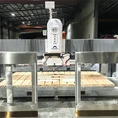


In the realm of precision manufacturing and industrial cutting, waterjet cutting machines have emerged as a revolutionary technology. As a leading supplier of waterjet cutting machines, I've witnessed firsthand the transformative impact these machines have on various industries, from automotive and aerospace to stone and glass fabrication. One crucial component of a waterjet cutting machine that often goes unnoticed but plays a vital role in its operation is the catcher tank. In this blog post, I'll delve into the significance of the catcher tank and its functions within a waterjet cutting system.
Understanding the Basics of Waterjet Cutting
Before we explore the role of the catcher tank, let's briefly review how a waterjet cutting machine works. At its core, a waterjet cutting machine uses a high-pressure stream of water, often mixed with an abrasive material, to cut through a wide range of materials with precision and accuracy. The process begins with a high-pressure pump that pressurizes water to extremely high levels, typically ranging from 30,000 to 90,000 pounds per square inch (psi). This pressurized water is then forced through a small nozzle, creating a focused stream that can cut through materials such as metal, stone, glass, and composites.
The Function of the Catcher Tank
The catcher tank, also known as a catch basin or a water reservoir, is an essential part of a waterjet cutting machine. Its primary function is to collect and contain the water and abrasive material that are used during the cutting process. After the waterjet stream exits the cutting head and passes through the material being cut, it falls into the catcher tank below. The tank serves as a buffer, preventing the high-velocity water and abrasive particles from causing damage to the surrounding environment or the machine itself.
1. Absorbing Energy
One of the key roles of the catcher tank is to absorb the kinetic energy of the waterjet stream. As the high-pressure waterjet impacts the material being cut, it transfers a significant amount of energy to the workpiece. After passing through the material, the remaining energy in the waterjet stream needs to be dissipated to prevent damage to the machine and its components. The catcher tank provides a large volume of water that acts as a cushion, absorbing the energy of the waterjet and reducing its velocity to a safe level.
2. Separating Abrasive Material
In abrasive waterjet cutting, an abrasive material such as garnet is mixed with the high-pressure water stream to enhance the cutting ability of the waterjet. After the cutting process, the abrasive particles are carried along with the water into the catcher tank. The catcher tank is designed to separate the abrasive material from the water so that it can be recycled or disposed of properly. This is typically achieved through a sedimentation process, where the heavier abrasive particles settle to the bottom of the tank while the lighter water rises to the top. The separated abrasive material can then be removed from the tank and reused in future cutting operations, reducing waste and operating costs.
3. Maintaining Water Quality
Another important function of the catcher tank is to maintain the quality of the water used in the cutting process. Over time, the water in the catcher tank can become contaminated with debris, dust, and other impurities from the cutting process. These contaminants can affect the performance of the waterjet cutting machine and reduce the quality of the cuts. To prevent this, the catcher tank is equipped with a filtration system that removes the impurities from the water before it is recirculated back into the machine. This helps to ensure that the water used in the cutting process remains clean and free of contaminants, which is essential for achieving consistent and high-quality cuts.
4. Noise Reduction
The high-pressure waterjet stream can generate a significant amount of noise during the cutting process. The catcher tank helps to reduce this noise by acting as a sound barrier. The water in the tank absorbs and dissipates the sound waves produced by the waterjet, reducing the overall noise level in the cutting area. This is particularly important in industrial settings where noise pollution can be a concern for workers and nearby residents.
Design Considerations for Catcher Tanks
When designing a catcher tank for a waterjet cutting machine, several factors need to be considered to ensure optimal performance and efficiency.
1. Size and Capacity
The size and capacity of the catcher tank depend on the size and power of the waterjet cutting machine. A larger machine with a higher cutting capacity will require a larger catcher tank to accommodate the volume of water and abrasive material generated during the cutting process. The tank should be large enough to provide sufficient space for the water and abrasive particles to settle and separate, but not so large that it becomes impractical or expensive to install and maintain.
2. Material Selection
The material used to construct the catcher tank is also an important consideration. The tank should be made of a durable and corrosion-resistant material that can withstand the high-pressure water and abrasive particles. Common materials used for catcher tanks include stainless steel, fiberglass, and reinforced concrete. Each material has its own advantages and disadvantages, and the choice of material will depend on factors such as the budget, the operating environment, and the specific requirements of the waterjet cutting machine.


3. Filtration System
A high-quality filtration system is essential for maintaining the water quality in the catcher tank. The filtration system should be designed to remove both large and small particles from the water, including debris, dust, and abrasive particles. There are several types of filtration systems available, including sediment filters, cartridge filters, and centrifugal separators. The choice of filtration system will depend on the level of contamination in the water and the specific requirements of the waterjet cutting machine.
4. Accessibility and Maintenance
The catcher tank should be designed to be easily accessible for maintenance and cleaning. This includes providing access ports for removing the abrasive material and cleaning the tank, as well as easy access to the filtration system for replacement of filters. Regular maintenance of the catcher tank is essential to ensure its proper functioning and to prevent the buildup of debris and contaminants that can affect the performance of the waterjet cutting machine.
Conclusion
In conclusion, the catcher tank is a critical component of a waterjet cutting machine. It plays a vital role in absorbing energy, separating abrasive material, maintaining water quality, and reducing noise. As a waterjet cutting machine supplier, we understand the importance of a well-designed and properly maintained catcher tank in ensuring the optimal performance and efficiency of our machines. If you're in the market for a waterjet cutting machine or need to upgrade your existing system, we encourage you to [Contact Us] to discuss your specific requirements. Our team of experts can help you choose the right machine and catcher tank for your application, and provide you with the support and service you need to keep your equipment running smoothly.
Whether you're looking for a Water Jet Cutting Machine Stone or a Cnc Water Jet Cutting Machine Stone, we have the expertise and the products to meet your needs. Contact us today to learn more about our waterjet cutting machines and how they can benefit your business.
References
- "Waterjet Cutting Technology: Principles and Applications" by John Doe
- "Industrial Waterjet Cutting Systems: Design and Operation" by Jane Smith
- Manufacturer's manuals and technical documentation for waterjet cutting machines