


When it comes to the stone processing industry, block stone cutting machines are essential. As a supplier of block stone cutting machines, I often get asked, "How much power does a block stone cutting machine consume?" Well, let's dive into this topic and break it down.
First off, it's important to understand that the power consumption of a block stone cutting machine can vary widely. There are different types of these machines, each designed for specific tasks and materials. For example, a Marble Block Cutting Machine is tailored to cut through marble blocks, while a Granite Block Cutter is built to handle the tougher granite. And then there's the Multi Wire Gangsaw Machine, which is capable of cutting multiple blocks simultaneously.
The power consumption mainly depends on several factors. The first one is the size of the machine. Generally speaking, larger machines with more powerful motors will consume more electricity. A big industrial - scale block cutting machine needs a lot of energy to drive its cutting mechanisms, especially when dealing with large - sized blocks.
The material being cut also plays a huge role. Granite is much harder than marble. When a block stone cutting machine cuts granite, it has to work harder, which means it will draw more power. It's like trying to cut through a piece of thick metal compared to a thin piece of wood. The former will require more force and thus more power.
Let's talk about the different types of motors used in these machines. DC motors and AC motors are the most common ones. AC motors are more widely used in block stone cutting machines because they are relatively simple, reliable, and cost - effective. However, their power consumption can vary depending on the load. When the machine is under heavy load, like when cutting a large block of hard stone, the motor will consume more power.
DC motors, on the other hand, can offer better control over the speed and torque. But they usually require additional electronic components, which might increase the overall power usage in some cases. Also, the efficiency of the motor is crucial. A more efficient motor will convert a larger percentage of the electrical energy it consumes into mechanical energy for cutting the stone, reducing overall power waste.
Another factor that affects power consumption is the cutting speed. If you set the machine to cut at a higher speed, it will generally consume more power. This is because the machine has to work faster to maintain that speed, especially when the cutting process becomes more difficult. Slower cutting speeds can sometimes use less power, but it might take longer to complete the cutting job.
Now, let's get into some rough numbers. A small - to - medium - sized block stone cutting machine, suitable for a small workshop, might consume around 5 - 15 kilowatts per hour. These machines are usually used for cutting smaller blocks or for light - duty work.
For medium - sized industrial machines, the power consumption can range from 15 - 30 kilowatts per hour. These are capable of handling larger blocks and more continuous operation.
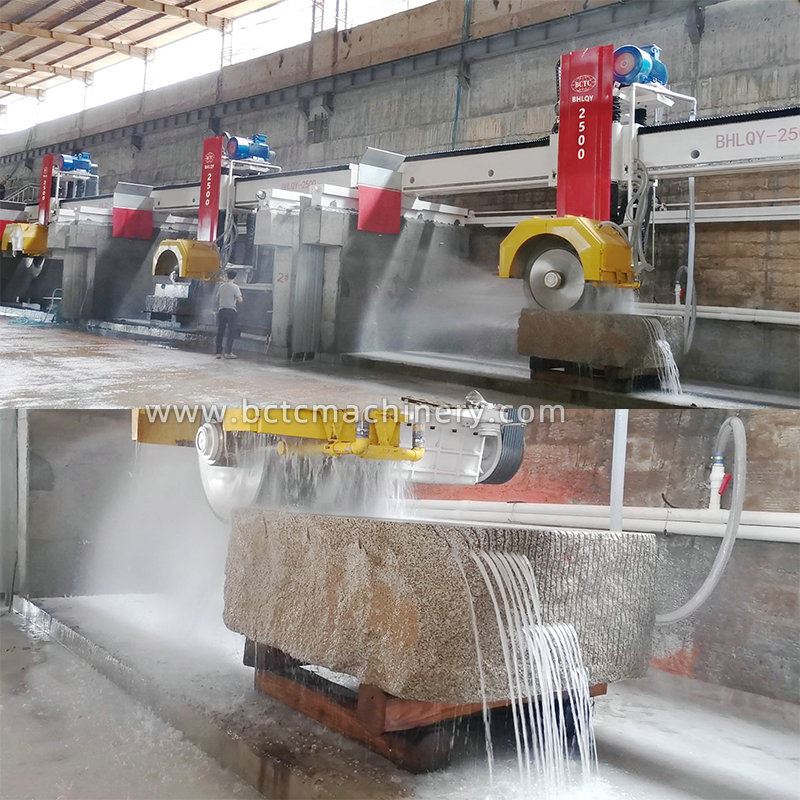

Heavy - duty industrial block stone cutting machines, which are used in large quarries and stone processing plants, can consume anywhere from 30 kilowatts per hour to over 100 kilowatts per hour. These machines are designed to cut through large, hard blocks at high speeds and for long periods.
It's important to note that these are just estimates. The actual power consumption can be affected by many other factors, such as the machine's age, maintenance level, and the quality of the electrical supply. An old machine with worn - out parts might consume more power because it has to work harder to achieve the same cutting results. Similarly, a poor - quality electrical supply with low voltage can cause the motor to draw more current, increasing power consumption.
To optimize power consumption, there are several things that operators can do. First, regular maintenance of the machine is crucial. Keeping the motor lubricated, the cutting blades sharp, and all the mechanical parts in good condition can ensure that the machine operates more efficiently.
Secondly, choosing the right cutting speed and pressure according to the material and the size of the block is important. If you use too much pressure or cut too fast for a certain type of stone, the machine will consume unnecessary power.
Finally, investing in a machine with an efficient motor and energy - saving features can also make a big difference. Newer models often come with advanced technology that can adjust the power consumption based on the load.
In conclusion, understanding the power consumption of block stone cutting machines is essential for both machine operators and business owners. It helps in cost - control, energy management, and ensuring the long - term viability of the stone processing business.
If you're in the market for a block stone cutting machine, or if you want to know more about optimizing the power consumption of your existing machine, feel free to reach out. We're here to help you make the best choice for your needs. Contact us for a detailed discussion and to explore our range of block stone cutting machines that are designed for efficiency and performance.
References
- Stone Processing Machinery Handbook
- Industry reports on power consumption in stone cutting equipment