


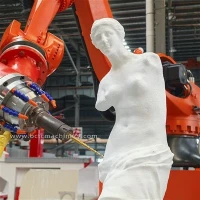


In the realm of stone processing, the CNC Bridge Cutting Machine stands as a cornerstone of efficiency and precision. As a prominent supplier of these cutting - edge machines, I've witnessed firsthand the transformative power of advanced control systems on cutting quality. This blog aims to delve into the significant improvements that advanced control systems bring to the cutting quality of a CNC Bridge Cutting Machine.
1. Understanding the Basics of a CNC Bridge Cutting Machine
Before we explore the impact of advanced control systems, it's essential to understand what a CNC Bridge Cutting Machine is. A CNC Bridge Cutting Machine is a sophisticated piece of equipment used for cutting various types of stones, including marble, granite, and quartz. It features a bridge - like structure that spans over the stone slab, with a cutting head mounted on the bridge. The machine operates based on computer - numerical - control (CNC) technology, which allows for highly accurate and repeatable cutting operations.
Our company offers a range of these machines, such as the Cnc Stone Cutting Machine, Bridge Marble Cutting Machine, and Bridge Stone Cutting Machine. These machines are designed to meet the diverse needs of stone processing industries, from small - scale workshops to large - scale manufacturing plants.
2. The Role of Advanced Control Systems
Advanced control systems are the brains behind the CNC Bridge Cutting Machine. They are responsible for managing and coordinating all the machine's operations, from the movement of the cutting head to the speed of the saw blade. These systems use sophisticated algorithms and sensors to ensure that the cutting process is as precise and efficient as possible.
2.1 Precision Cutting
One of the most significant benefits of advanced control systems is the improvement in cutting precision. Traditional cutting machines often rely on manual adjustments and operator skills, which can lead to variations in cutting accuracy. In contrast, advanced control systems can control the movement of the cutting head with micron - level precision. This means that the machine can cut stones with extremely tight tolerances, resulting in high - quality finished products.


For example, when cutting complex shapes or patterns, the advanced control system can precisely follow the programmed path, ensuring that every cut is accurate and consistent. This is particularly important in industries where precision is crucial, such as the production of high - end countertops or architectural elements.
2.2 Reduced Material Waste
Another advantage of advanced control systems is the reduction of material waste. By optimizing the cutting path and minimizing the width of the kerf (the width of the cut made by the saw blade), the control system can make the most of the available stone slab. This not only saves on material costs but also contributes to environmental sustainability.
The advanced control system can analyze the shape and size of the stone slab and the required cuts, and then generate an optimal cutting plan. This plan takes into account factors such as the orientation of the slab, the location of any defects or inclusions, and the desired finished products. As a result, the machine can cut more pieces from a single slab, reducing the amount of wasted material.
2.3 Improved Surface Finish
The surface finish of the cut stone is also significantly improved with advanced control systems. These systems can adjust the cutting parameters, such as the speed of the saw blade and the feed rate of the cutting head, in real - time based on the characteristics of the stone being cut. This ensures that the surface of the cut stone is smooth and free of rough edges or chipping.
For instance, when cutting softer stones like marble, the control system can slow down the cutting speed to prevent the stone from cracking or chipping. On the other hand, when cutting harder stones like granite, it can increase the cutting speed and pressure to ensure a clean and efficient cut. The result is a high - quality surface finish that requires less post - processing, saving time and labor costs.
2.4 Enhanced Productivity
Advanced control systems can also enhance the productivity of the CNC Bridge Cutting Machine. By automating many of the cutting processes, these systems can reduce the time required for each cut and increase the overall throughput of the machine.
The control system can perform multiple tasks simultaneously, such as loading and unloading the stone slabs, setting up the cutting parameters, and monitoring the cutting process. This allows the machine to operate continuously with minimal operator intervention, maximizing the number of cuts that can be made in a given time period.
3. Real - World Examples
To illustrate the impact of advanced control systems on cutting quality, let's look at some real - world examples. A small - scale stone processing workshop that previously used a traditional cutting machine was facing challenges in meeting the high - precision requirements of their customers. After upgrading to a CNC Bridge Cutting Machine with an advanced control system, they were able to significantly improve the quality of their products.
The new machine could cut complex shapes with much higher accuracy, and the surface finish of the cut stones was much smoother. As a result, the workshop was able to take on more high - end projects and increase their customer base. Another example is a large - scale manufacturing plant that was struggling with high material waste. By implementing an advanced control system, they were able to reduce their material waste by up to 20%, resulting in substantial cost savings.
4. The Future of Advanced Control Systems in CNC Bridge Cutting Machines
The development of advanced control systems for CNC Bridge Cutting Machines is an ongoing process. In the future, we can expect to see even more sophisticated systems that offer greater precision, efficiency, and flexibility.
For example, the integration of artificial intelligence (AI) and machine learning algorithms into control systems will enable the machine to learn from past cutting operations and optimize its performance in real - time. This will further improve cutting quality and reduce the need for manual intervention. Additionally, the use of advanced sensors and imaging technologies will allow the machine to detect and adapt to changes in the stone's properties during the cutting process, ensuring consistent cutting quality.
5. Conclusion and Call to Action
In conclusion, the use of advanced control systems in a CNC Bridge Cutting Machine has a profound impact on cutting quality. From precision cutting and reduced material waste to improved surface finish and enhanced productivity, these systems offer numerous benefits that can help stone processing businesses stay competitive in the market.
If you're in the market for a CNC Bridge Cutting Machine or looking to upgrade your existing equipment, we invite you to explore our range of products. Our machines are equipped with state - of - the - art advanced control systems that can take your stone cutting operations to the next level. Contact us today to start a conversation about your specific needs and how our machines can meet them. We're here to help you achieve the highest level of cutting quality and efficiency in your stone processing business.
References
- Smith, J. (2020). "Advancements in CNC Stone Cutting Technology." Journal of Stone Processing, 15(2), 45 - 52.
- Brown, A. (2019). "The Impact of Control Systems on Cutting Quality in Stone Processing." International Journal of Manufacturing Technology, 22(3), 78 - 85.
- Johnson, R. (2021). "Future Trends in CNC Bridge Cutting Machines." Stone Industry Review, 30(1), 12 - 18.