


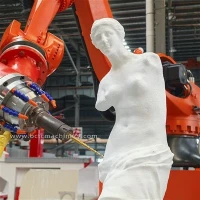


In the realm of stone processing, the CNC bridge cutting machine stands as a cornerstone of precision and efficiency. As a reputable supplier of CNC bridge cutting machines, I've witnessed firsthand the transformative power of these machines in various cutting applications. Today, I'd like to delve into the topic of cutting precision in different cutting modes of a CNC bridge cutting machine, exploring how these modes affect the final output and why precision matters in the stone industry.
Understanding Cutting Modes in CNC Bridge Cutting Machines
CNC bridge cutting machines are equipped with multiple cutting modes, each designed to meet specific requirements of stone processing. The most common cutting modes include straight cutting, curve cutting, and bevel cutting. Each mode offers unique advantages and challenges in terms of precision.
Straight Cutting
Straight cutting is the most basic and widely used cutting mode in CNC bridge cutting machines. It involves cutting the stone along a straight line, which is ideal for creating rectangular or square-shaped pieces. The precision of straight cutting depends on several factors, including the quality of the cutting blade, the stability of the machine, and the accuracy of the cutting path programmed into the CNC system.
In straight cutting, the cutting blade moves along the X and Y axes of the machine, following the programmed path. The precision of the cut is determined by the accuracy of the machine's motion control system. A high-quality CNC bridge cutting machine with advanced motion control technology can achieve extremely high precision in straight cutting, with tolerances as low as ±0.1 mm.
Curve Cutting
Curve cutting is used to create complex shapes and contours in the stone. This mode requires a more advanced CNC system that can accurately control the movement of the cutting blade along a curved path. The precision of curve cutting is influenced by the smoothness of the curve, the speed of the cutting blade, and the accuracy of the interpolation algorithm used by the CNC system.
To achieve high precision in curve cutting, the CNC system must be able to calculate the optimal cutting path based on the shape of the curve. This involves using advanced mathematical algorithms to interpolate between points on the curve and determine the appropriate speed and feed rate for the cutting blade. A well-designed CNC bridge cutting machine can achieve excellent precision in curve cutting, with smooth and accurate curves that meet the most demanding design requirements.
Bevel Cutting
Bevel cutting is used to create angled edges on the stone. This mode is commonly used in applications such as countertop fabrication, where beveled edges add a decorative touch to the finished product. The precision of bevel cutting depends on the accuracy of the bevel angle and the depth of the cut.
In bevel cutting, the cutting blade is tilted at a specific angle to create the desired bevel. The CNC system must be able to accurately control the angle and depth of the cut to ensure consistent and precise results. A high-quality CNC bridge cutting machine with advanced bevel cutting capabilities can achieve bevel angles with a precision of ±0.1 degrees, ensuring that the finished product meets the highest standards of quality.
Factors Affecting Cutting Precision
Several factors can affect the cutting precision of a CNC bridge cutting machine. Understanding these factors is essential for achieving optimal results in stone processing.
Machine Quality and Stability
The quality and stability of the CNC bridge cutting machine play a crucial role in determining the cutting precision. A well-built machine with a robust frame and high-quality components is more likely to provide consistent and accurate cutting results. The machine's motion control system, including the motors, drives, and linear guides, must be able to operate smoothly and precisely to ensure accurate cutting.
Cutting Blade Selection
The choice of cutting blade is another important factor that affects cutting precision. Different types of cutting blades are designed for specific types of stone and cutting applications. For example, diamond blades are commonly used for cutting hard stones such as granite and marble, while abrasive blades are more suitable for softer stones. The quality and sharpness of the cutting blade also play a significant role in determining the precision of the cut.
CNC Programming
The accuracy of the CNC programming is critical for achieving high cutting precision. The CNC program must be carefully designed to ensure that the cutting path is accurate and that the machine operates at the optimal speed and feed rate. Any errors or inaccuracies in the programming can result in poor cutting precision and wasted materials.
Operator Skill and Experience
The skill and experience of the operator also have a significant impact on the cutting precision. A skilled operator is able to set up the machine correctly, select the appropriate cutting parameters, and monitor the cutting process to ensure that the desired results are achieved. Regular training and experience are essential for operators to develop the necessary skills and knowledge to operate the CNC bridge cutting machine effectively.
Importance of Cutting Precision in the Stone Industry
Cutting precision is of utmost importance in the stone industry for several reasons.
Quality and Aesthetics
In the stone industry, the quality and aesthetics of the finished product are paramount. High cutting precision ensures that the stone pieces are cut to the exact dimensions and specifications, resulting in a finished product that is visually appealing and meets the highest standards of quality. Precise cuts also minimize the need for additional finishing work, reducing production time and costs.
Efficiency and Productivity
Cutting precision also plays a crucial role in improving efficiency and productivity in the stone processing industry. By achieving accurate cuts, the machine can produce more pieces in less time, reducing waste and increasing overall productivity. This is particularly important in large-scale production environments where time and cost are critical factors.
Customer Satisfaction
Finally, cutting precision is essential for ensuring customer satisfaction. Customers expect high-quality stone products that meet their specific requirements and expectations. By providing precise cuts and high-quality finished products, stone fabricators can build a reputation for excellence and attract more customers.
Conclusion
In conclusion, the cutting precision of a CNC bridge cutting machine is a critical factor in the stone processing industry. By understanding the different cutting modes, factors affecting cutting precision, and the importance of precision in the stone industry, stone fabricators can make informed decisions when selecting a CNC bridge cutting machine and optimize their cutting processes to achieve the best possible results.
As a supplier of CNC bridge cutting machines, we are committed to providing our customers with high-quality machines that offer exceptional cutting precision and performance. Our Marble Cnc Machine, Marble and Granite Bridge Saw, and Bridge Stone Cutting Machine are designed to meet the diverse needs of the stone processing industry, providing accurate and efficient cutting solutions for a wide range of applications.


If you are interested in learning more about our CNC bridge cutting machines or have any questions about cutting precision, please feel free to contact us. We would be happy to discuss your specific requirements and provide you with a customized solution that meets your needs.
References
- Smith, J. (2020). Precision Cutting in Stone Processing. Stone Industry Journal, 25(3), 45-52.
- Johnson, A. (2019). Advances in CNC Bridge Cutting Machine Technology. Manufacturing Today, 18(2), 67-74.
- Brown, R. (2018). The Importance of Cutting Precision in the Stone Industry. Stone World Magazine, 32(4), 23-30.