


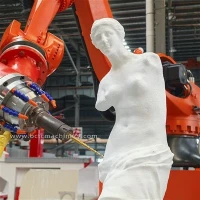


As a supplier of 5 Axis Bridge Saws, I understand the critical importance of stability during the cutting process. A stable 5 Axis Bridge Saw not only ensures precise cuts but also enhances the overall efficiency and quality of the stone cutting operations. In this blog post, I will share some effective strategies on how to improve the stability of a 5 Axis Bridge Saw during cutting.
1. Machine Structure Design and Rigidity
The foundation of a stable 5 Axis Bridge Saw lies in its structure design. A well - engineered machine with high rigidity can significantly reduce vibrations and deflections during cutting.
- Robust Frame Construction: The frame of the bridge saw should be made of high - quality materials such as heavy - duty steel. For example, using thick - walled steel tubes or welded steel structures can provide a solid base for the machine. The frame's design should also be optimized to distribute the cutting forces evenly. This can be achieved through proper cross - bracing and reinforcement in critical areas. A rigid frame helps to minimize the movement of the saw head and other components, resulting in more accurate cuts.
- Bridge Design: The bridge of the 5 Axis Bridge Saw is a key component that supports the cutting head. It should be designed with sufficient strength and stiffness. A wide and thick bridge can better withstand the lateral and vertical forces generated during cutting. Additionally, the bridge's guide rails should be precisely machined and properly installed to ensure smooth and stable movement of the cutting head.
2. Precision Guide Rails and Linear Motion Systems
The guide rails and linear motion systems play a crucial role in the stability of the 5 Axis Bridge Saw.
- High - Quality Guide Rails: Investing in high - precision guide rails is essential. Linear guide rails made of hardened steel or ceramic materials offer excellent wear resistance and low friction. They can ensure smooth and accurate movement of the cutting head along the X, Y, and Z axes. Regular maintenance of the guide rails, such as cleaning and lubrication, is also necessary to keep them in good working condition.
- Ball Screws and Linear Actuators: Ball screws are commonly used to convert rotary motion into linear motion in 5 Axis Bridge Saws. High - quality ball screws with a high lead accuracy can provide precise positioning and smooth movement. Linear actuators, on the other hand, can be used to control the movement of the cutting head in different axes. They should be properly calibrated and maintained to ensure stable operation.
3. Spindle and Cutting Tool Selection
The spindle and cutting tool are directly involved in the cutting process, and their selection can have a significant impact on the stability of the saw.
- Spindle Power and Stability: The spindle of the 5 Axis Bridge Saw should have sufficient power to handle the cutting requirements. A powerful spindle can maintain a consistent cutting speed, which is crucial for stable cutting. Additionally, the spindle should be well - balanced to reduce vibrations. Regular spindle maintenance, including checking the bearings and alignment, can help to ensure its long - term stability.
- Cutting Tool Quality: Using high - quality cutting tools is essential for stable cutting. The cutting tool should be sharp and suitable for the type of stone being cut. Dull or inappropriate cutting tools can cause excessive vibrations and uneven cuts. It is also important to choose the right cutting parameters, such as cutting speed, feed rate, and depth of cut, based on the properties of the stone and the cutting tool.
4. Control System and Software Optimization
The control system and software of the 5 Axis Bridge Saw are responsible for coordinating the movement of different axes and controlling the cutting process.
- Advanced Control System: An advanced control system can provide precise control over the movement of the cutting head. It should be able to adjust the cutting parameters in real - time based on the feedback from sensors. For example, if the control system detects excessive vibrations, it can automatically adjust the cutting speed or feed rate to maintain stability.
- Software Optimization: The software of the 5 Axis Bridge Saw should be optimized for stability. It can include features such as path planning, collision detection, and error compensation. Path planning algorithms can ensure that the cutting head moves along the most efficient and stable path. Collision detection can prevent the cutting head from hitting obstacles, which can cause damage to the machine and affect stability. Error compensation algorithms can correct any small errors in the movement of the cutting head, resulting in more accurate and stable cuts.
5. Installation and Foundation
Proper installation and a solid foundation are essential for the stability of the 5 Axis Bridge Saw.
- Level Installation: The saw should be installed on a flat and level surface. Any unevenness in the installation can cause the machine to tilt, which can lead to unstable cutting. During installation, it is important to use leveling devices to ensure that the machine is perfectly horizontal.
- Foundation Stability: A solid foundation can absorb the vibrations generated during cutting. The foundation should be made of concrete or other materials with high mass and stiffness. It should also be properly designed to support the weight of the machine and the cutting forces.
6. Operator Training and Maintenance
Well - trained operators and regular maintenance are crucial for maintaining the stability of the 5 Axis Bridge Saw.
- Operator Training: Operators should receive comprehensive training on the operation and maintenance of the 5 Axis Bridge Saw. They should understand the importance of stability during cutting and how to operate the machine correctly. Training should include topics such as machine setup, cutting parameter selection, and safety procedures.
- Regular Maintenance: Regular maintenance is essential to keep the 5 Axis Bridge Saw in good working condition. This includes cleaning, lubrication, inspection, and replacement of worn - out parts. A maintenance schedule should be established, and all maintenance tasks should be carried out according to the manufacturer's recommendations.
In conclusion, improving the stability of a 5 Axis Bridge Saw during cutting requires a comprehensive approach that includes machine structure design, precision components, proper tool selection, control system optimization, installation, and maintenance. By implementing these strategies, you can ensure that your 5 Axis Bridge Saw operates stably and efficiently, resulting in high - quality stone cutting.
If you are interested in our Bridge Saw Machine Granite, Cnc Machine For Stone Cutting, or Cnc Bridge Saw, please feel free to contact us for more information and to discuss your specific requirements. We are committed to providing you with the best 5 Axis Bridge Saw solutions.


References
- Stone Cutting Machinery Handbook, [Publisher Name], [Year]
- Journal of Precision Engineering and Manufacturing, various issues related to machine tool stability
- Manufacturer's manuals of 5 Axis Bridge Saws for technical specifications and maintenance guidelines