


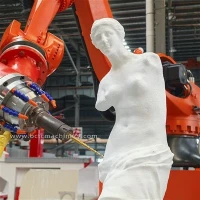


Adjusting the polishing effect of a stone polishing machine is a crucial skill for achieving high - quality stone finishing. As a stone polishing machine supplier, I've encountered various challenges that customers face when it comes to optimizing the polishing results. In this blog, I'll share some in - depth knowledge and practical tips on how to adjust the polishing effect of a stone polishing machine.
Understanding the Basics of Stone Polishing
Before delving into the adjustment process, it's essential to understand the fundamental principles of stone polishing. Stone polishing is a multi - step process that involves removing surface irregularities and creating a smooth, reflective surface. The key factors influencing the polishing effect include the type of stone, the grit of the polishing pads, the pressure applied, the rotation speed of the machine, and the water flow.
Different types of stones, such as marble, granite, and limestone, have different physical and chemical properties, which require different polishing approaches. For example, marble is a relatively soft stone and can be polished with finer grit pads at a lower pressure, while granite is harder and may need coarser grit pads and higher pressure.
Selecting the Right Polishing Pads
The selection of polishing pads is one of the most critical factors in achieving a good polishing effect. Polishing pads come in various grits, from coarse to fine. Coarse grit pads are used for initial grinding and removing deep scratches, while fine grit pads are used for the final polishing to achieve a high - gloss finish.
As a general rule, start with a coarse grit pad (e.g., 50 - 100 grit) to remove any surface imperfections. Then, gradually move to finer grit pads (such as 200, 400, 800, 1500, and 3000 grit). Each grit level should be used until the scratches from the previous grit are completely removed.
When choosing polishing pads, make sure they are compatible with the type of stone you are polishing. For example, there are specific pads designed for marble, granite, and other stones. Using the wrong type of pad can result in poor polishing results or even damage to the stone. You can find a wide range of high - quality polishing pads suitable for our Single Head Marble Polishing Machine.
Adjusting the Pressure
The pressure applied by the stone polishing machine is another important factor. Too much pressure can cause uneven polishing, overheating, and damage to the stone, while too little pressure may not be sufficient to remove the scratches and achieve the desired gloss.
Most modern stone polishing machines allow you to adjust the pressure. Start with a moderate pressure and observe the polishing effect. If the scratches are not being removed effectively, you can gradually increase the pressure. However, be careful not to exceed the recommended pressure for the specific stone and machine.
For softer stones like marble, a lower pressure is usually sufficient. You can start with a pressure of around 10 - 15 pounds per square inch (psi). For harder stones like granite, you may need to increase the pressure to 20 - 30 psi.
Controlling the Rotation Speed
The rotation speed of the polishing machine also affects the polishing effect. A higher rotation speed can increase the cutting efficiency of the polishing pads, but it may also generate more heat, which can damage the stone and the polishing pads.


Generally, start with a lower rotation speed and increase it gradually as you progress through the finer grit polishing pads. For the initial rough grinding with coarse grit pads, a rotation speed of 100 - 200 revolutions per minute (rpm) may be appropriate. As you move to the finer grit pads, you can increase the speed to 300 - 400 rpm.
It's important to note that the optimal rotation speed may vary depending on the type of stone, the size of the machine, and the polishing pads used. So, it's always a good idea to test on a small, inconspicuous area of the stone first.
Managing the Water Flow
Water plays a crucial role in the stone polishing process. It helps to cool the polishing pads and the stone, reduce dust, and improve the polishing effect. Without proper water flow, the polishing pads can overheat, wear out quickly, and leave behind streaks on the stone.
Most stone polishing machines are equipped with a water system. You need to ensure that the water flow is consistent and sufficient. The water should be evenly distributed over the surface of the stone and the polishing pads.
To adjust the water flow, you can usually control the valve on the water supply line. Start with a moderate flow rate and adjust it according to the heat generated during the polishing process. If the pads start to overheat, increase the water flow. If there is too much water and it causes a slushy mess, reduce the flow slightly.
Aligning and Balancing the Machine
Proper alignment and balancing of the stone polishing machine are essential for achieving an even polishing effect. An unbalanced machine can cause uneven pressure distribution, resulting in inconsistent polishing.
Regularly check the alignment of the polishing pads and the machine head. Make sure that the pads are parallel to the stone surface and are evenly pressed against it. You can use a level tool to check the alignment.
Also, check the balance of the machine. If the machine vibrates excessively during operation, it may be out of balance. Some machines have adjustable counterweights that can be used to correct the balance.
Using the Right Polishing Compounds
In addition to the polishing pads, polishing compounds can also be used to enhance the polishing effect. Polishing compounds contain abrasive particles and other chemical ingredients that can help to remove fine scratches and add extra shine to the stone surface.
There are different types of polishing compounds available for different types of stones. Apply the polishing compound evenly on the stone surface according to the manufacturer's instructions. Then, use the polishing machine with a fine - grit pad to work the compound into the stone.
Troubleshooting Common Polishing Issues
Even with the best - laid plans, you may encounter some common polishing issues. Here are some solutions:
- Uneven gloss: This could be due to uneven pressure, improper alignment of the machine, or inconsistent water flow. Check and adjust the pressure, alignment, and water flow as described above.
- Scratches after polishing: If you see scratches after using the fine - grit pads, it may be because the previous coarse - grit scratches were not completely removed. Go back to the appropriate grit pad and repeat the polishing process.
- Dull finish: A dull finish may be caused by using the wrong type of polishing pads, insufficient pressure, or improper water flow. Review and adjust these factors.
Conclusion
Adjusting the polishing effect of a stone polishing machine requires a combination of knowledge, skill, and patience. By understanding the key factors such as polishing pad selection, pressure adjustment, rotation speed control, water flow management, and machine alignment, you can achieve excellent polishing results.
As a stone polishing machine supplier, we offer a wide range of high - quality machines, including the Single Head Marble Polishing Machine, Stone Edge Profiling Polishing Machine, and Stone Line Polishing Machine. If you are looking to improve your stone polishing process or have any questions about our products, we encourage you to contact us for a detailed discussion. Our team of experts is ready to assist you in finding the best solutions for your stone - polishing needs.
References
- "Stone Polishing Handbook" - A comprehensive guide on stone polishing techniques and best practices.
- Manufacturer's manuals of various stone polishing machines for detailed technical information.