


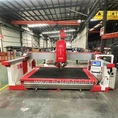
As a supplier of 3D stone carving machines, I often get asked about how these sophisticated pieces of equipment ensure the precise alignment of carving patterns. It's a crucial aspect of the stone carving process, as accurate alignment directly impacts the quality and aesthetic appeal of the final product. In this blog post, I'll delve into the various methods and technologies that 3D stone carving machines employ to achieve this alignment.
Initial Design and Digital Modeling
The process of ensuring alignment begins long before the actual carving starts. It all starts with the design phase. Using advanced computer - aided design (CAD) software, designers create detailed 3D models of the carving patterns. These models are highly accurate and can be adjusted to fit the specific dimensions and shape of the stone block.
CAD software allows for precise control over every aspect of the design, including the size, shape, and orientation of the pattern. Designers can rotate, scale, and translate the model to ensure it is perfectly positioned on the virtual representation of the stone. Once the design is finalized, it is saved in a format that can be read by the 3D stone carving machine's control system.
Machine Calibration
Before any carving can take place, the 3D stone carving machine must be properly calibrated. Calibration ensures that the machine's axes (X, Y, and Z) are accurately aligned and that the cutting tools move precisely as intended. This involves using specialized calibration tools and procedures to measure and adjust the machine's components.
One common method of calibration is the use of a laser alignment system. The laser emits a beam of light that is used to check the straightness and perpendicularity of the machine's axes. If any misalignments are detected, the machine's control system can make the necessary adjustments to correct them.
Another important aspect of calibration is the setting of the zero point. The zero point is the reference point from which all movements of the cutting tool are measured. It is crucial to set the zero point accurately to ensure that the carving pattern is aligned correctly on the stone.


Positioning the Stone
Once the machine is calibrated, the next step is to position the stone block correctly on the machine's worktable. This is a critical step, as any misalignment of the stone can result in an inaccurate carving.
Most 3D stone carving machines are equipped with a worktable that has a grid or a set of reference points. These reference points are used to align the stone block with the machine's axes. The operator can use measuring tools, such as rulers or calipers, to ensure that the stone is placed in the correct position.
In some cases, the machine may also use a vacuum system to hold the stone firmly in place during the carving process. This helps to prevent the stone from shifting or moving, which could cause misalignment of the carving pattern.
Real - Time Monitoring and Feedback
During the carving process, the 3D stone carving machine continuously monitors the position of the cutting tool and the progress of the carving. This is done using a variety of sensors, such as encoders and lasers.
Encoders are devices that measure the movement of the machine's axes. They provide feedback to the control system, which can then adjust the speed and direction of the cutting tool as needed. Lasers can also be used to measure the distance between the cutting tool and the stone surface, ensuring that the carving depth is consistent.
If any deviations from the intended carving pattern are detected, the control system can make real - time adjustments to correct them. This helps to ensure that the final carving is as accurate as possible.
Software - Based Alignment Tools
In addition to the hardware - based methods of alignment, many 3D stone carving machines also use software - based alignment tools. These tools can analyze the design file and the current position of the cutting tool to make sure that the carving pattern is being executed correctly.
Some software can perform automatic alignment based on the shape and dimensions of the stone block. It can adjust the design to fit the available space on the stone, ensuring that the pattern is centered and properly aligned.
Other software features include the ability to preview the carving process before it starts. This allows the operator to check the alignment and make any necessary adjustments before the actual carving begins.
Compatibility with Different Stone Types
It's important to note that different types of stones have different physical properties, which can affect the alignment of the carving pattern. For example, marble is a relatively soft stone, while granite is much harder.
Our 3d Stone Carving Machine is designed to be compatible with a wide range of stone types. The machine's control system can adjust the cutting speed, pressure, and tool path based on the specific properties of the stone being carved. This ensures that the carving pattern is aligned correctly, regardless of the stone type.
Applications in Different Industries
The precise alignment capabilities of 3D stone carving machines make them suitable for a variety of industries. In the architectural industry, these machines can be used to create intricate stone facades, columns, and decorative elements. The accurate alignment ensures that the architectural details are consistent and visually appealing.
In the memorial industry, 3D stone carving machines are used to create personalized headstones and monuments. The ability to align the carving pattern precisely allows for the creation of detailed and meaningful designs that accurately represent the wishes of the client.
We also offer Cnc Marble Engraving Machine and Cnc Granite Engraving Machine, which are specifically designed for engraving marble and granite respectively. These machines use the same alignment technologies to ensure high - quality results.
Conclusion
In conclusion, a 3D stone carving machine ensures the alignment of the carving pattern through a combination of initial design, machine calibration, proper stone positioning, real - time monitoring, and software - based alignment tools. These technologies work together to ensure that the final carving is accurate, consistent, and of the highest quality.
If you're in the market for a 3D stone carving machine or have any questions about how our machines ensure alignment, please don't hesitate to contact us. We're here to help you find the best solution for your stone carving needs.
References
- "Computer - Aided Manufacturing in Stone Carving", Journal of Manufacturing Technology, Volume 25, Issue 3
- "Advanced Sensor Technologies for Precision Machining", Precision Engineering Journal, Volume 38, Issue 2
- "Calibration and Alignment Procedures for CNC Machines", Manufacturing Systems Handbook, Chapter 7